
R. viscosum [Species]
R. viscosum [Species]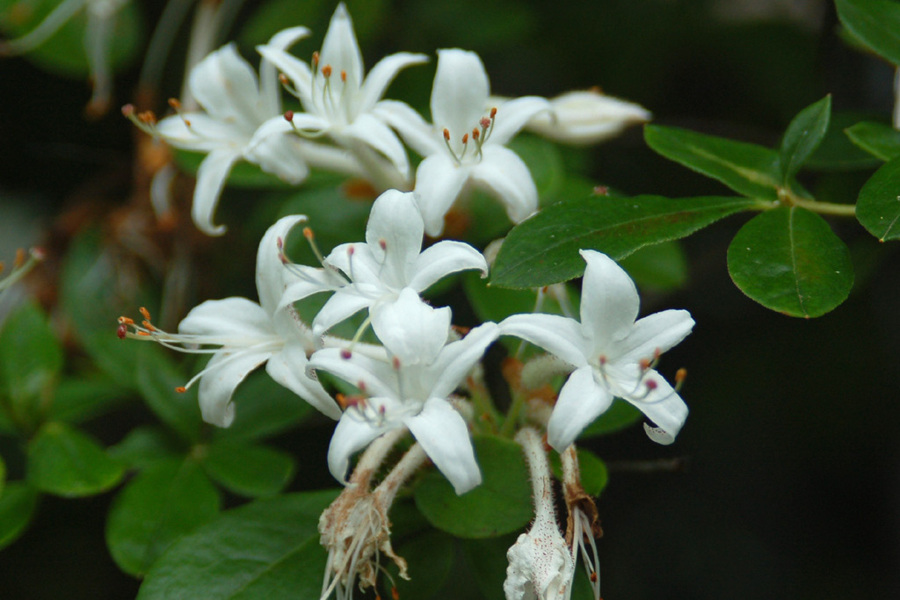 Photo © Don Hyatt |
|
|
|
| Cultivar: | Group: | Color: | Blooms: | Type: | Reg Ref: |
|---|---|---|---|---|---|
| R. viscosum | Species | Very Late | Deciduous | ||
| Height: | Width: | Hardy: | Other Name(s): | Seed Parent: | Pollen Parent: |
| 3-6’ | -20 F | Swamp Azalea, Swamp Honeysuckle | |||
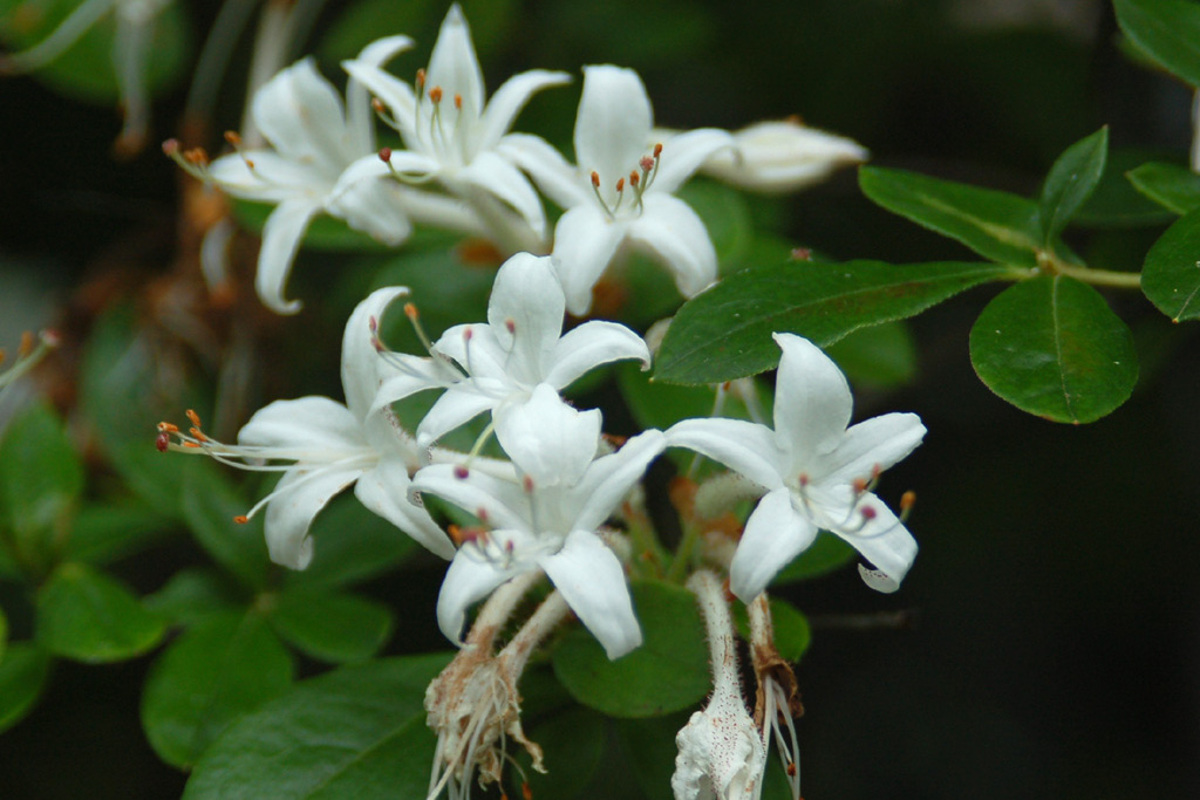
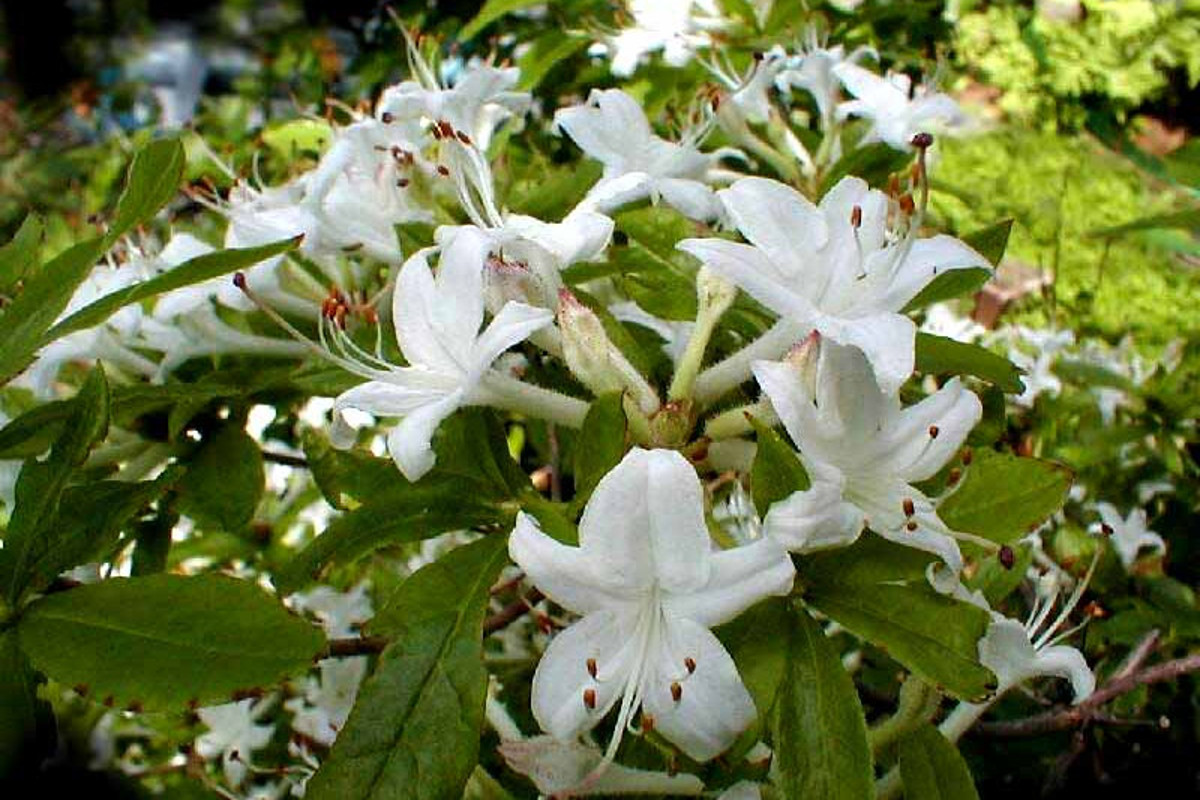
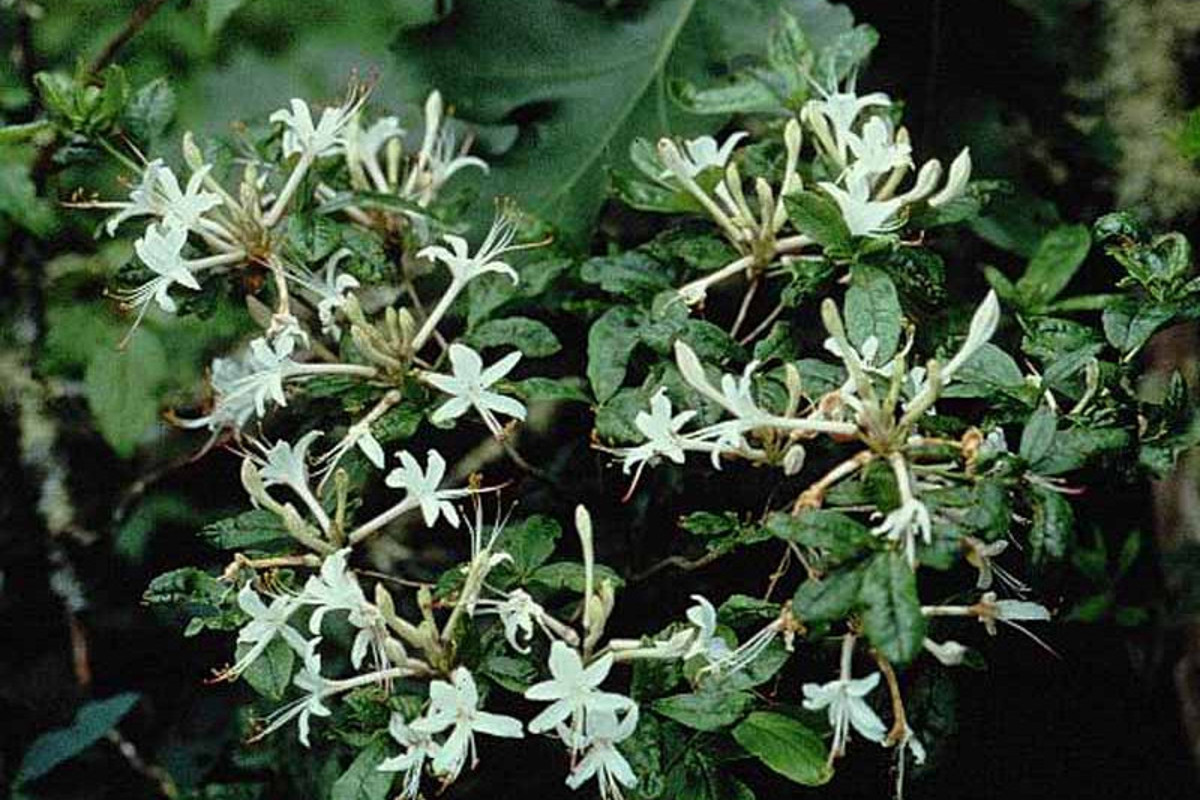
| 3-6’ x 3-4’ wide, eventually to 15’ tall, multi-branched, upright habit, usually stoloniferous. Flowers creamy white to blush to rose-pink. Narrowly tubular-funnel shape with 5 lobes and a long narrow tub covered with sticky glandular hairs, 1-1 ½” wide, 4-12 per cluster. Blooms late, usually early to mid July, after the foliage emerges. Highly fragrant with a musky clove-like scent. Leaves dark green and hairless above, waxy, paler, blue-green cast below. Leaves lustrous green, turning an attractive shades of yellow, orange, maroon, and purple in fall. Leaf shape: lance, ovate, or elliptic to obovate, to 2 ½” long. Young growth is hairy. Twigs pubescent. Winter buds of the low elevation forms are usually glabrous, but may be finely pubescent. Will bloom in heavy shade, but does much better in more sun. Hardy to -20 F; Zone 4-7. Easily propagated from cuttings. The word ‘viscosum’ means sticky, referring to the sticky substance excreted by glandular hairs on the corolla tubes. Native to eastern US, usually growing in low marshy areas along edges of ponds, swamps, and streams, but also found in high mixed forest mountains from Maine to Florida and west to Ohio, plus North Carolina, Tennessee, Arkansas, Louisiana, and southeast Texas. This species played an important role in the parentage of the earlier hybrid deciduous azaleas. Formerly R viscosum oblongifolium. | |||||